
01 ⎯⎯ DPT
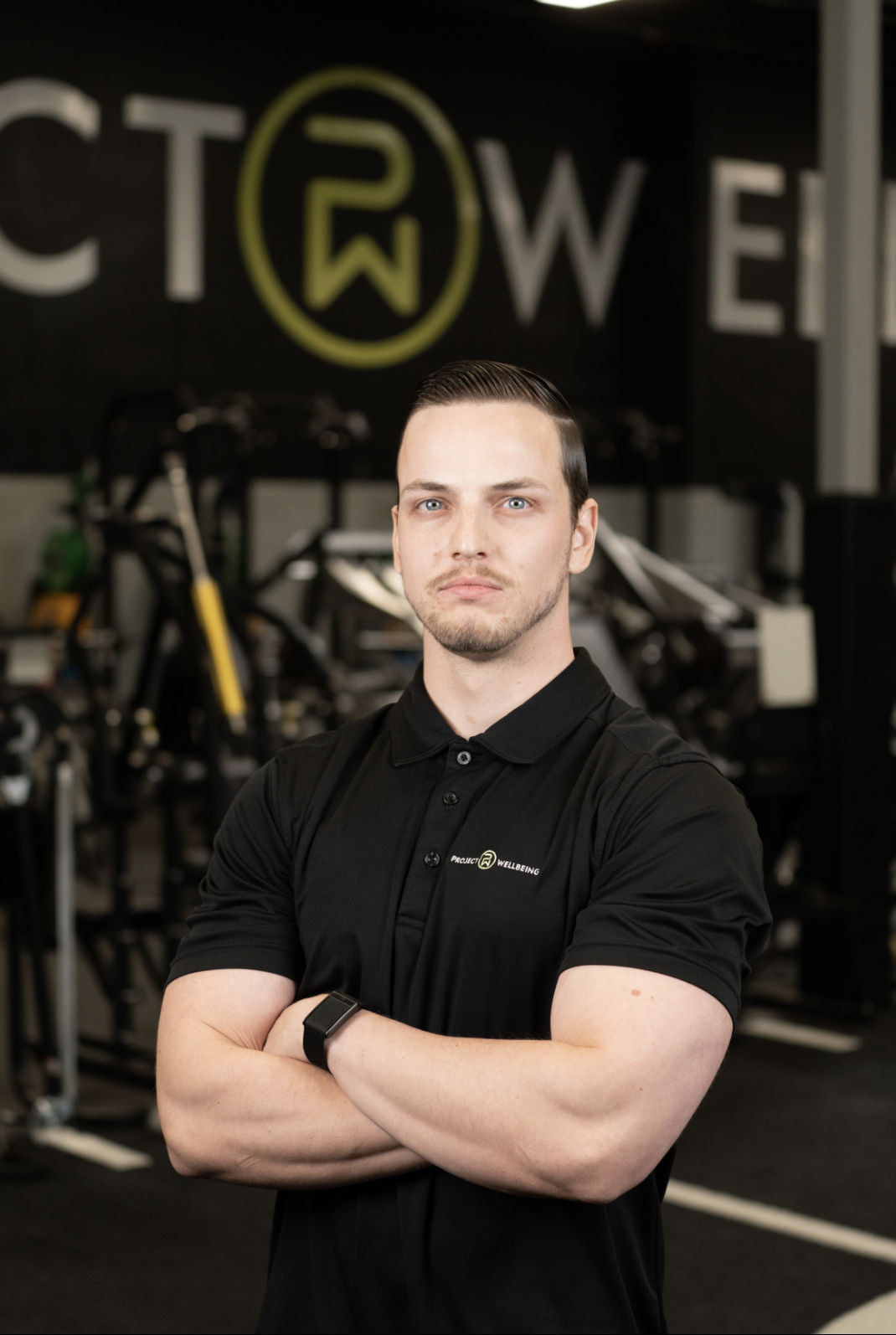
Tanner Mueller, DPT
Director of Physical Therapy
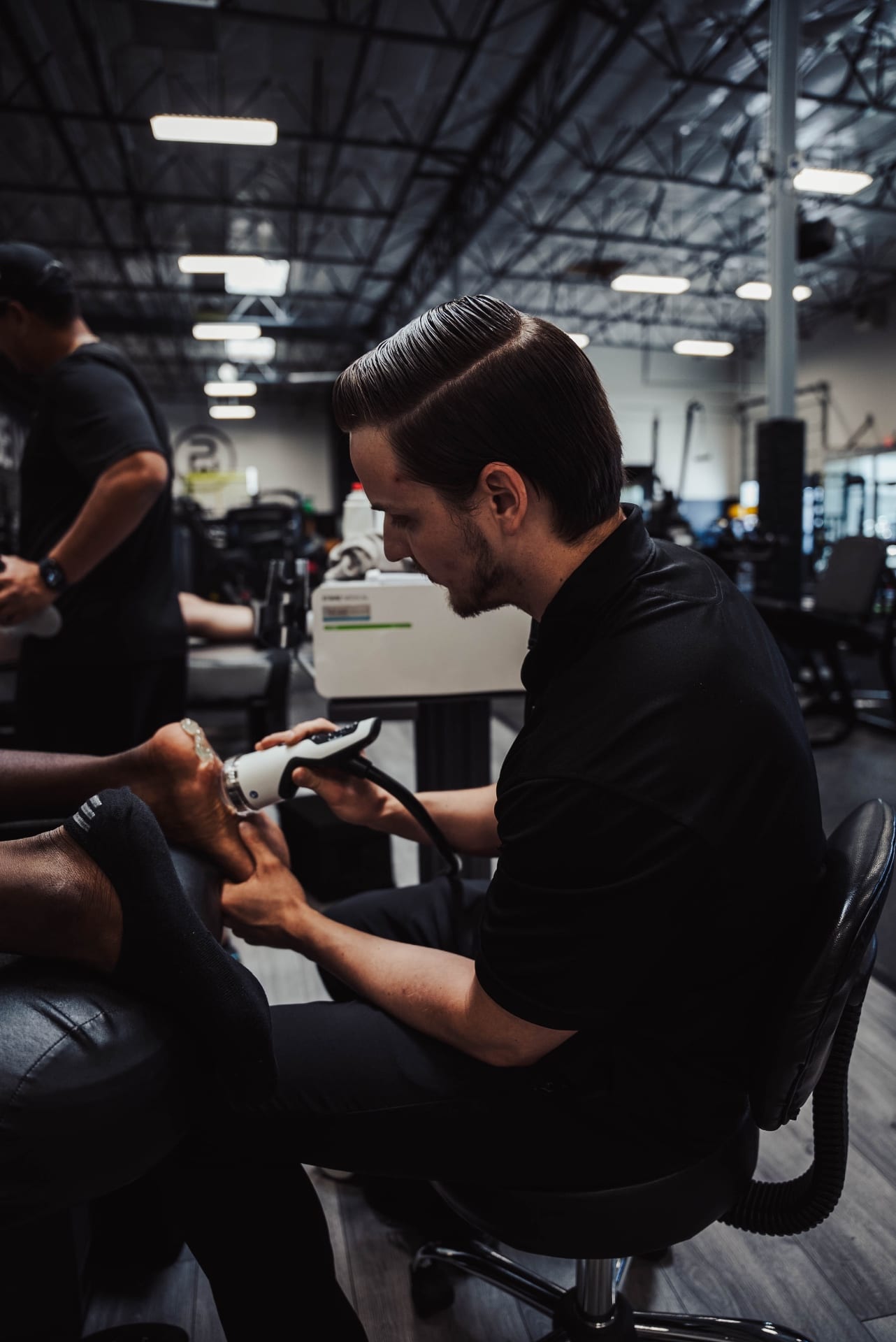
Leads the PT program. Specializes in complex post-surgical rehab, chronic pain, and integrating force-plate data into return-to-sport plans.
Physical Therapy · Las Vegas
Performance physical therapy in Las Vegas — designed to help you reduce pain, restore mobility, and rebuild strength through one-on-one athletic and sports rehab.
What to Expect
One-on-one, doctor-led physical therapy — assess, treat, rebuild. Here's what a session at Project Wellbeing actually looks like.
Your PT Team
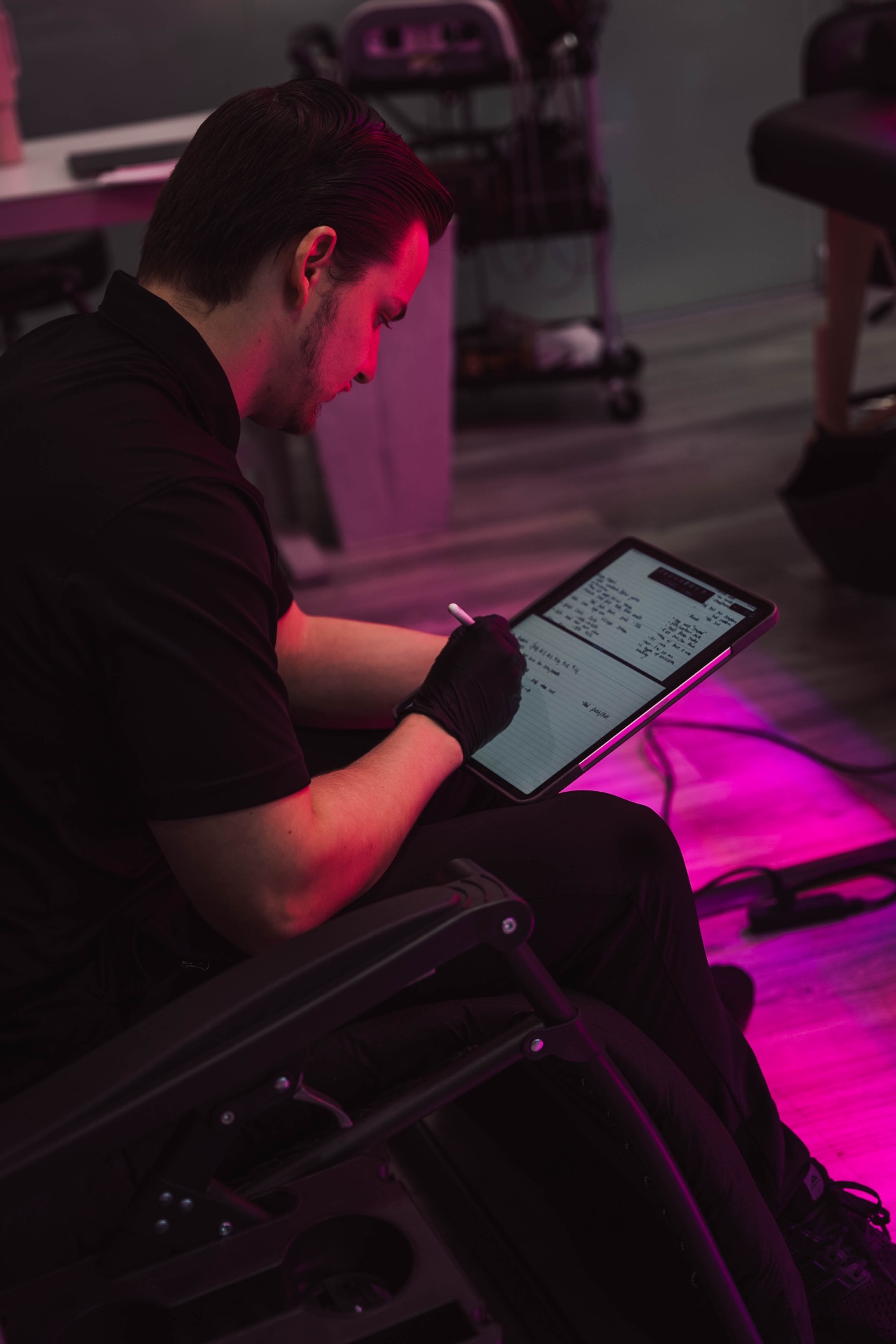
Every session — start to finish — is one-on-one with a licensed DPT. No aides, no handoffs, no double-booking.
01 ⎯⎯ DPT
Director of Physical Therapy
Leads the PT program. Specializes in complex post-surgical rehab, chronic pain, and integrating force-plate data into return-to-sport plans.
02 ⎯⎯ DPT
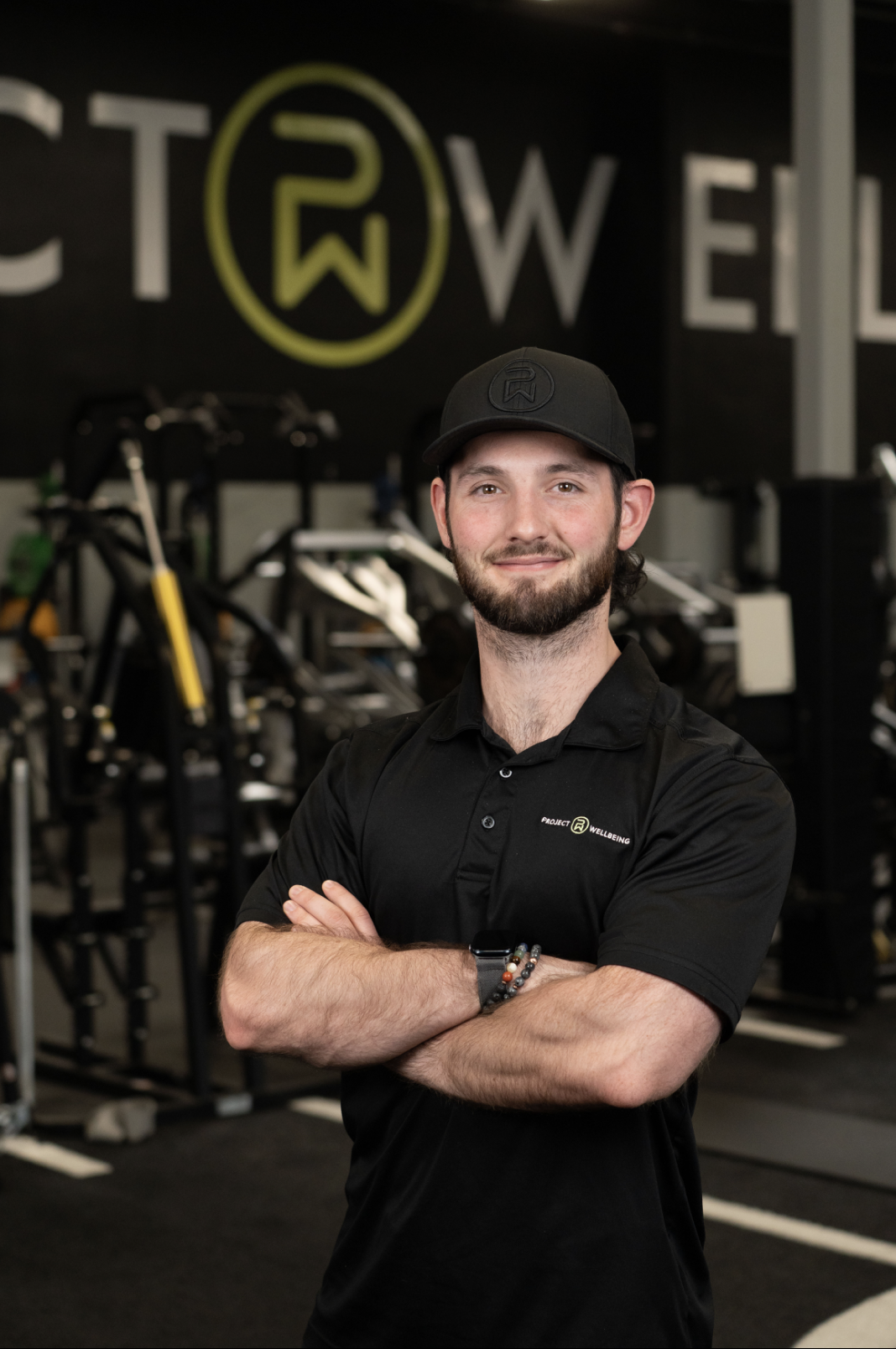
Doctor of Physical Therapy
Movement-driven approach. Focuses on orthopedic injury recovery, joint mobility, and rebuilding strength after long layoffs.
03 ⎯⎯ DPT
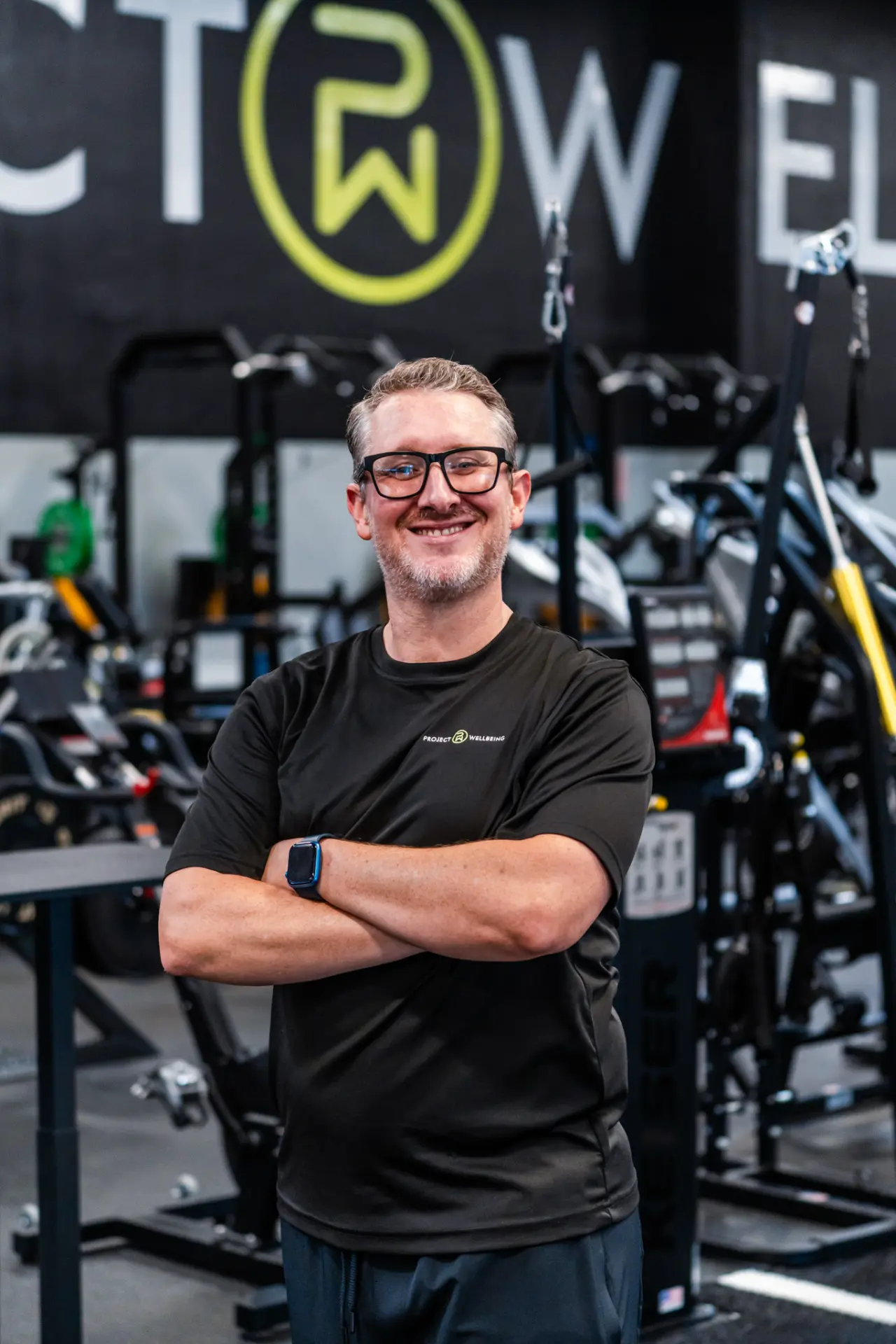
Doctor of Physical Therapy
One-on-one performance rehab. Blends manual therapy with progressive loading to get members out of pain and back to training.
Reserve your evaluation
Three quick steps. Complete one to unlock the next.
Step 01
Reserve your spot
Step 02
Book & pay
Step 03
Health history
What's included
Step 01 — Reserve your evaluation
Drop your name, email, and phone. We'll text you the booking link so you don't lose your slot.
Why People Choose Us
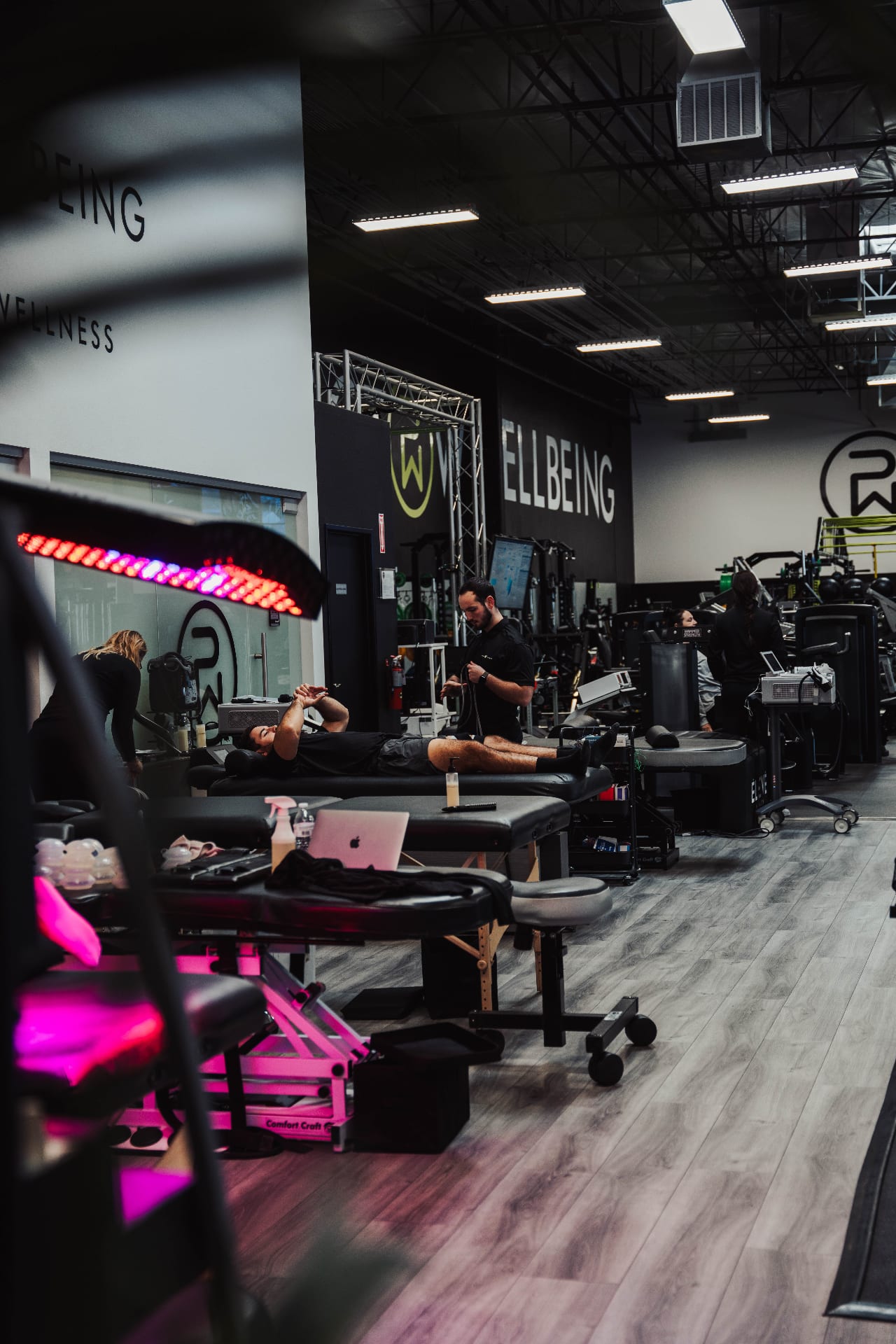
1:1 Doctor-led care
Real movement. Real results.
Aggregate outcomes from prior members. Individual results vary.
⎯⎯ Chapter / 002
Why we're different
Five disciplines, one system. Each chapter compounds on the last — from the first scan to your final benchmark — so recovery becomes an upgrade, not a return to baseline.
The Diagnosis
Most clinics assess pain. We assess the entire human system — capturing motion, force, composition, and recovery as quantifiable data.
⎯ Tools / Methods
The Protocol
Your numbers shape your plan. Every session is calibrated to your asymmetries, deficits, and capacity — not a generic recovery template.
⎯ Tools / Methods
The Technology
An arsenal of medical-grade modalities working in concert — accelerating tissue healing, modulating the nervous system, and restoring function faster.
⎯ Tools / Methods
Data-Driven Care
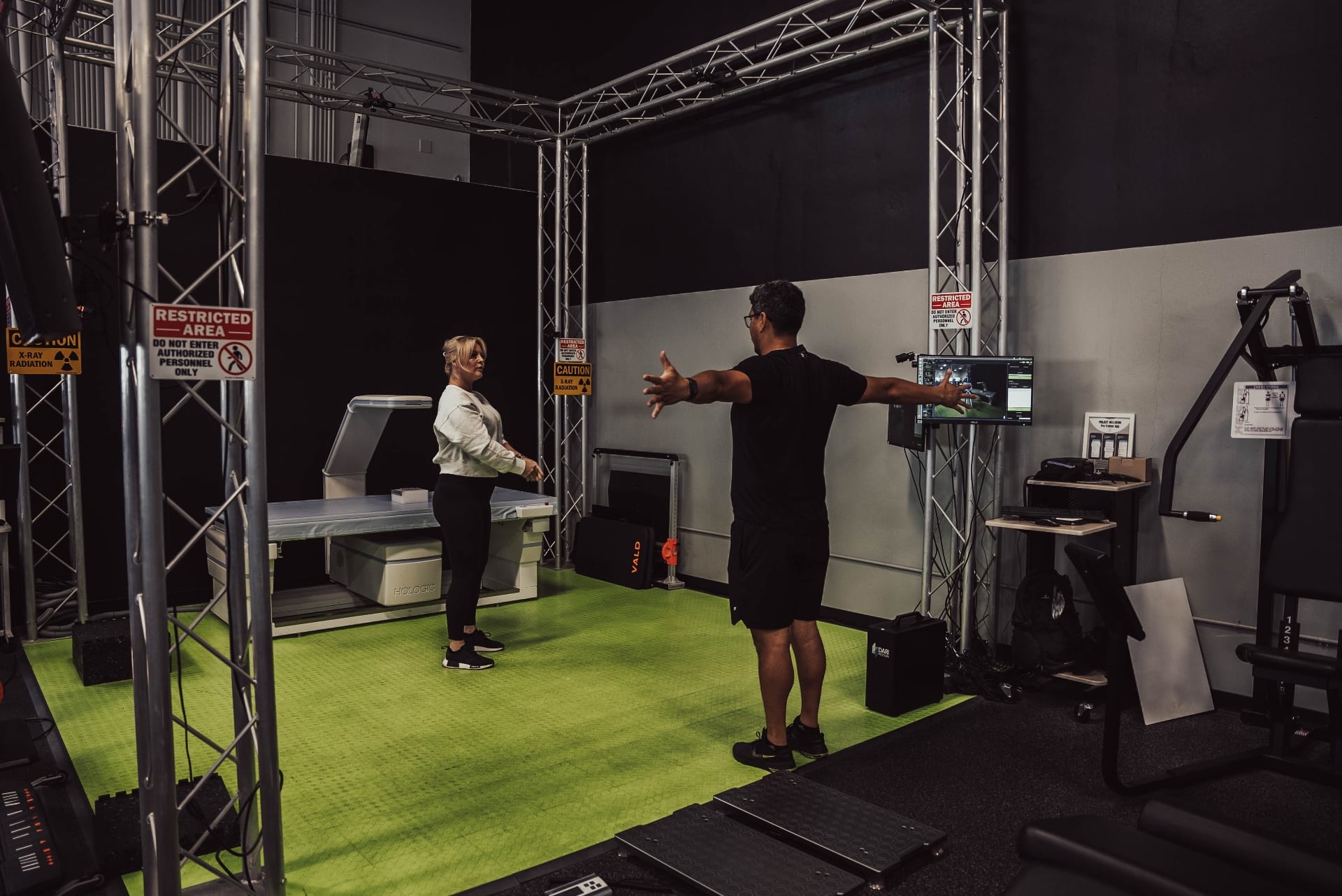
Your PT visits include VALD testing — force plates and dynamometry that quantify your strength, asymmetries, and progress. DEXA, DARI, and VO2 Max are optional assessments you can add to see deeper performance data.
Included With Every PT Visit
Built In
Force plates and dynamometry — quantified strength, asymmetries, and biomechanics built into your PT visits.
No add-on fee · Used to guide your care plan
Optional · Purchased Separately
Not required for PT — available when you want a deeper picture.
Body composition, bone density, and visceral fat — track lean mass and recovery.
Learn moreMarkerless 3D motion capture — full-body movement quality and asymmetry detection.
Learn moreCardiorespiratory ceiling and metabolic efficiency for performance and conditioning.
Learn moreVALD is the only assessment used during your PT sessions
Recovery Technology
Every technology below is in-house and applied by your Doctor of Physical Therapy — matched to the phase of healing you're in. Tap any tool for the science behind it.
What it's for
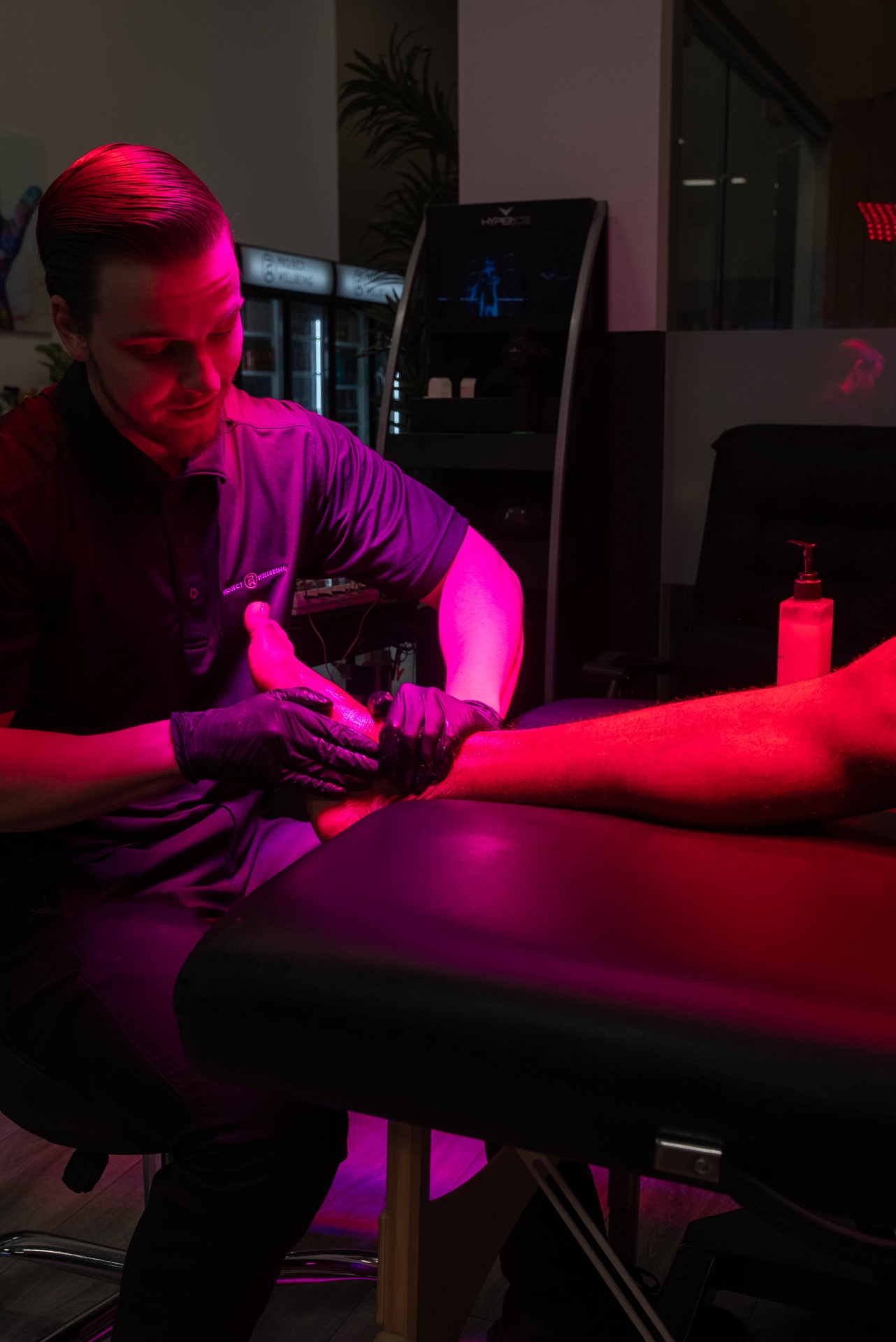
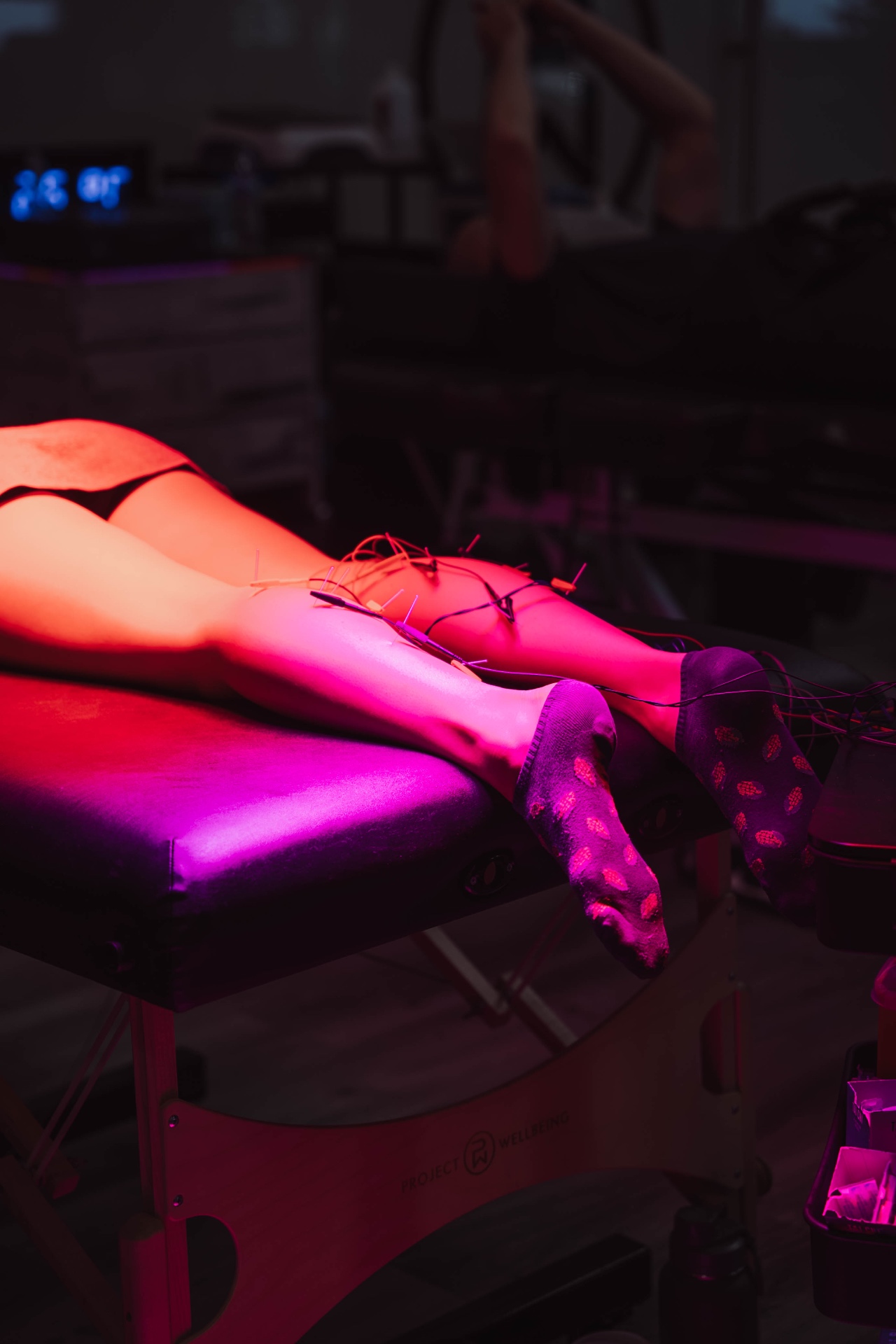
Releasing deep myofascial trigger points and taut bands that hands-on work alone can't reach — chronic tightness, guarded muscles, strains, and overuse patterns.
The Science — Mechanism of Action
A sterile monofilament needle is advanced into a taut band, producing a local twitch response — a spinal-reflex depolarization of the dysfunctional motor endplate. That twitch is associated with a measurable drop in local acetylcholine, substance P, and CGRP concentrations, restoring resting sarcomere length. Mechanical needle disruption also triggers a brief inflammatory-repair cascade with local vasodilation and increased blood flow, while segmental afferent input modulates dorsal-horn sensitivity (gate-control and diffuse noxious inhibitory control).
How your therapist uses it
In session
10–15 min within your 60-minute visit
Access
In-house · included when clinically indicated
Modalities are applied by a licensed clinician as part of a physical therapy plan of care when clinically indicated. Individual results vary. This is not a substitute for evaluation by your physician.
What it's for
Deep, non-contact stimulation of painful joints, tendons, and post-surgical tissue — useful when the area is too irritable to tolerate hands-on pressure.
The Science — Mechanism of Action
High-intensity electromagnetic pulses generate a rapidly changing magnetic field that penetrates several centimeters without attenuation from skin or fat. By Faraday induction, that field induces eddy currents inside the tissue which depolarize peripheral nerve membranes and stimulate ion-channel activity in fibroblasts and chondrocytes. Documented downstream effects include increased microcirculation, altered nociceptor firing thresholds, and up-regulated ATP synthesis supporting the repair phase.
How your therapist uses it
In session
8–12 min per region
Access
In-house · included when clinically indicated
Modalities are applied by a licensed clinician as part of a physical therapy plan of care when clinically indicated. Individual results vary. This is not a substitute for evaluation by your physician.
What it's for
Re-establishing the brain-body connection after injury, surgery, or long-standing compensation — used by pro athletes to wake up inhibited muscles and restore natural movement patterns.
The Science — Mechanism of Action
NEUBIE uses a proprietary direct-current waveform that locates areas of altered neuromuscular signaling — often protective shutdown or compensation around old injuries. By applying stimulation during active movement, it re-syncs afferent feedback with efferent motor output, reducing arthrogenic muscle inhibition and helping the nervous system adopt a more efficient recruitment strategy.
How your therapist uses it
In session
15–25 min, active during movement
Access
In-house · included when clinically indicated
Modalities are applied by a licensed clinician as part of a physical therapy plan of care when clinically indicated. Individual results vary. This is not a substitute for evaluation by your physician.
What it's for
Full-body recovery support between sessions — circulation, inflammation control, sleep quality, and the systemic side of healing.
The Science — Mechanism of Action
Pulsed electromagnetic fields at low frequency induce microcurrents across cell membranes, restoring transmembrane potential in cells that have depolarized under injury or inflammation. This modulates voltage-gated calcium channels and calmodulin-dependent nitric oxide release, driving vasodilation and improved oxygen delivery. Mitochondrial studies show increased electron-transport-chain efficiency and ATP output, alongside a shift in the cytokine profile away from pro-inflammatory signaling.
How your therapist uses it
In session
20–30 min
Access
In-house · included when clinically indicated
Modalities are applied by a licensed clinician as part of a physical therapy plan of care when clinically indicated. Individual results vary. This is not a substitute for evaluation by your physician.
What it's for
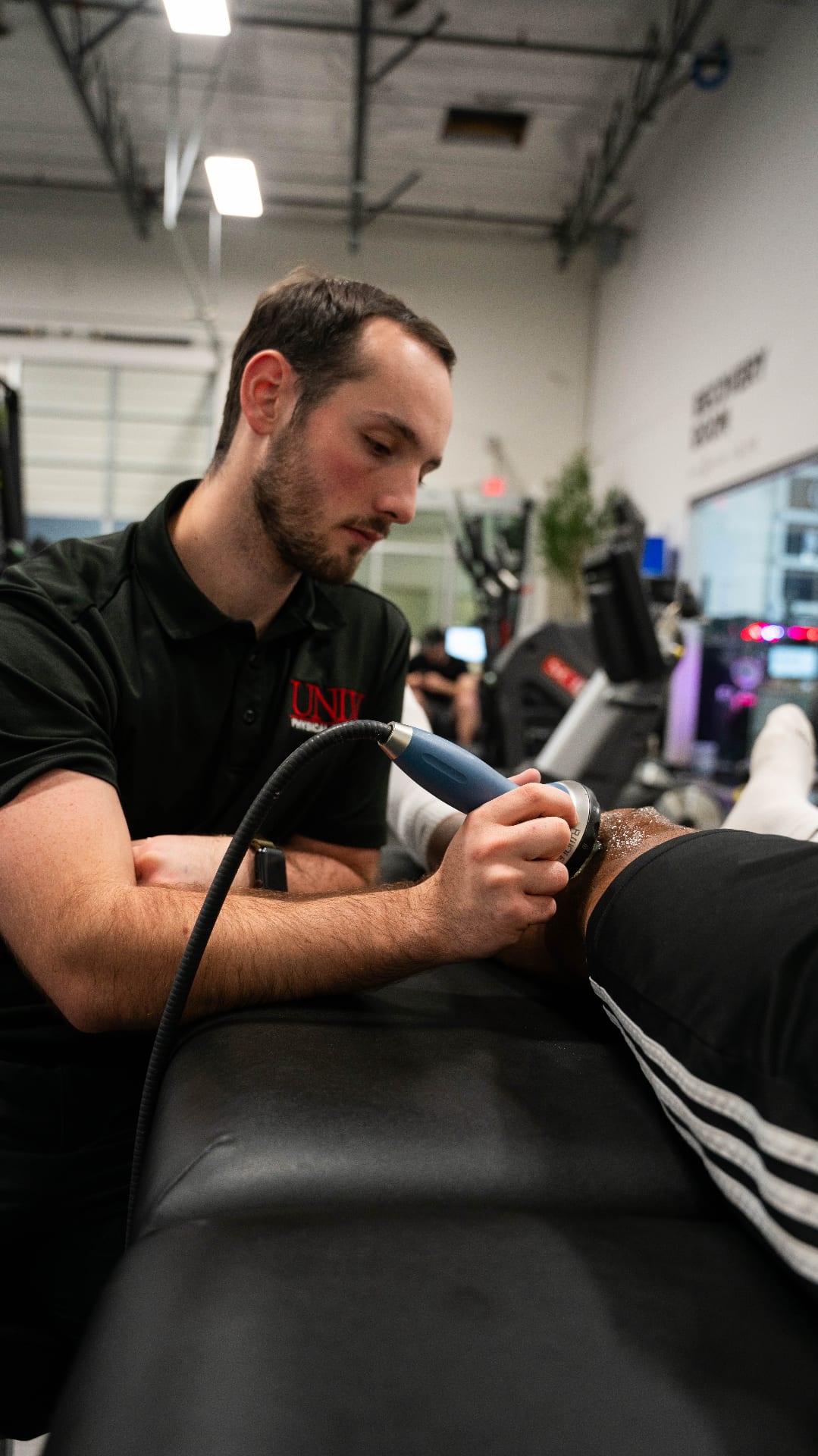
Stubborn tendon, fascial, and connective-tissue pain — plantar fascia, Achilles, patellar tendon, lateral elbow, and deep trigger points.
The Science — Mechanism of Action
Piezoelectric crystals fire in sequence to converge an acoustic pressure wave at a defined focal depth. The mechanical shear at that focus is transduced by integrins and cytoskeletal proteins into biochemical signaling — mechanotransduction — which up-regulates VEGF and eNOS and initiates neovascularization within chronically avascular tendon. The wave also disrupts calcific deposits and fibrotic cross-links, and produces a transient reduction in unmyelinated C-fiber density at the treatment site.
How your therapist uses it
In session
8–12 min per site
Access
In-house · included when clinically indicated
Modalities are applied by a licensed clinician as part of a physical therapy plan of care when clinically indicated. Individual results vary. This is not a substitute for evaluation by your physician.
What it's for
Long-standing tendon and bony insertion pain where the body's own repair response has gone quiet.
The Science — Mechanism of Action
Radial and focused acoustic pulses create rapid pressure gradients and micro-cavitation at the tissue interface. The controlled mechanical insult re-triggers the inflammatory-repair cascade in tissue stuck in a degenerative rather than healing state, recruiting mesenchymal stem cells and up-regulating collagen type I synthesis and tenocyte proliferation. Repeated exposures are associated with improved tendon tensile organization on imaging.
How your therapist uses it
In session
10–15 min per region
Access
In-house · included when clinically indicated
Modalities are applied by a licensed clinician as part of a physical therapy plan of care when clinically indicated. Individual results vary. This is not a substitute for evaluation by your physician.
What it's for
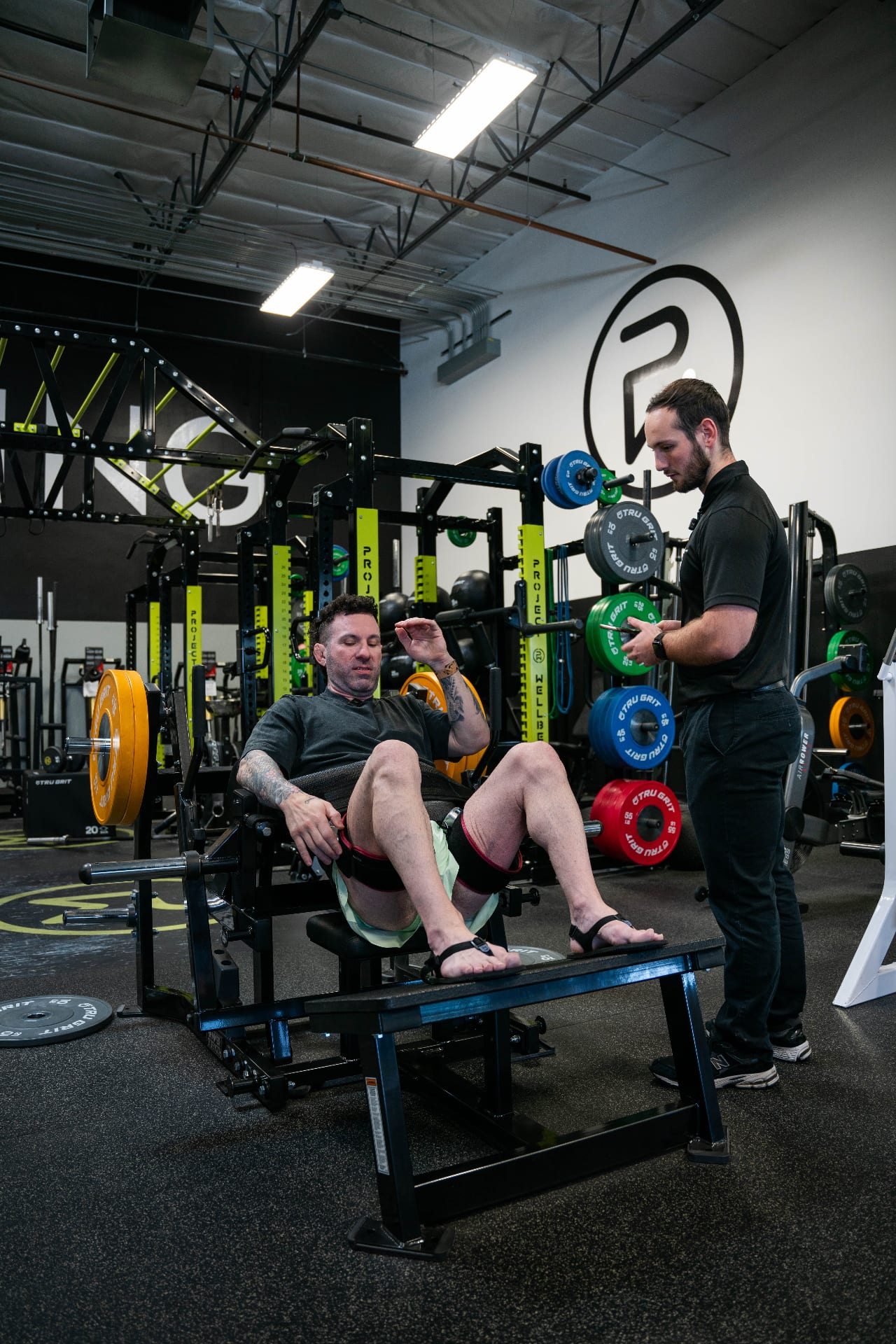
Building strength and muscle when the joint can't tolerate heavy load yet — early post-surgical, acute pain, and de-conditioned limbs.
The Science — Mechanism of Action
A calibrated cuff limits venous return while preserving arterial inflow, creating a hypoxic, metabolite-rich intramuscular environment. Accumulated lactate and hydrogen ions plus reduced oxygen availability force early recruitment of high-threshold Type II fibers at loads as low as 20–30% of one-rep max, and amplify mTORC1 signaling and growth-hormone response. Hypertrophy and strength gains approach those of heavy resistance training without the joint compression.
How your therapist uses it
In session
15–20 min, cuff-monitored
Access
In-house · clinician-calibrated pressure
Modalities are applied by a licensed clinician as part of a physical therapy plan of care when clinically indicated. Individual results vary. This is not a substitute for evaluation by your physician.
What it's for
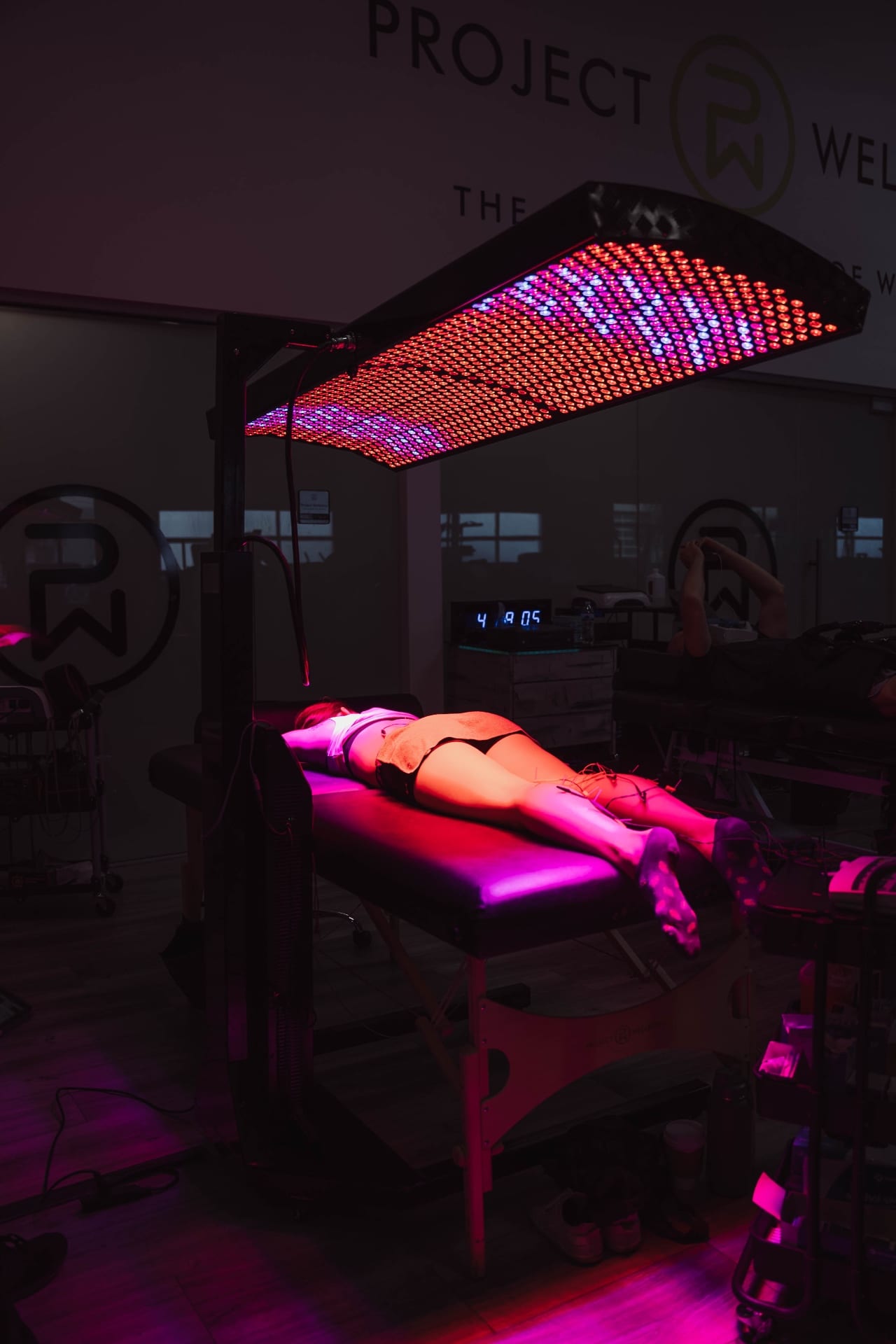
Lying on a medical-grade multi-light bed delivers red and near-infrared wavelengths across the entire body — accelerating tissue repair, calming inflammation, and supporting systemic recovery in a single session.
The Science — Mechanism of Action
Red (630–660 nm) and near-infrared (810–850 nm) wavelengths penetrate skin and subcutaneous tissue, where they are absorbed by cytochrome c oxidase in mitochondria. Photodissociation of inhibitory nitric oxide from the electron transport chain restores ATP production and reduces oxidative stress. The downstream signaling modulates NF-κB and COX-2 inflammatory pathways, increases local microcirculation, and supports collagen synthesis and fibroblast activity in connective tissue.
How your therapist uses it
In session
20 min full-body session
Access
In-house · included when clinically indicated
Modalities are applied by a licensed clinician as part of a physical therapy plan of care when clinically indicated. Individual results vary. This is not a substitute for evaluation by your physician.
What it's for
Deep thermal and non-thermal tissue stimulation for chronic joints, deep tendons, ligaments, and post-surgical sites that need more than surface-level work.
The Science — Mechanism of Action
Winback delivers a high-frequency alternating current (300 kHz–1 MHz) via capacitive (CET) and resistive (RET) electrodes. CET targets tissues with high water content — muscle and vascular beds — producing a controlled thermal gradient that increases microcirculation and tissue extensibility. RET penetrates high-resistance structures — tendon, ligament, bone, and fibrotic scar — without relying on surface heat. The oscillating electromagnetic field also drives non-thermal effects: increased ion exchange, restored cell-membrane polarization, and enhanced macrophage and fibroblast activity in the repair phase.
How your therapist uses it
In session
10–20 min per region
Access
In-house · included when clinically indicated
Modalities are applied by a licensed clinician as part of a physical therapy plan of care when clinically indicated. Individual results vary. This is not a substitute for evaluation by your physician.
All under one roof
Sequenced, not stacked.
Testimonials
Client Testimonial
Client Testimonial
Client Testimonial
Client Testimonial
Client Testimonial
Client Testimonial
Individual results vary. Testimonials reflect personal experience and are not a guarantee of outcomes.
Inside the Facility
FAQ
We are a cash-pay practice and do not bill insurance. This lets us give you a full 60 minutes one-on-one with a Doctor of Physical Therapy instead of the rushed, aide-assisted visits insurance dictates. We provide a superbill on request that many members submit to their insurance for out-of-network reimbursement. HSA and FSA cards are accepted.
Three things: every visit is the full 60 minutes one-on-one with your Doctor of PT (not handed off to an aide), your plan is built on real data from movement capture, force plates, and pain mapping, and you have in-house access to recovery technology — shockwave, dry needling, PEMF, NEUBIE — that most clinics refer out for.
We reassess at every visit and adjust your plan based on what your data is actually showing. If we don't see meaningful change in 3–4 sessions, we'll tell you directly and either change approach or refer you to the right specialist. Your time and money matter to us.
Most members see meaningful change in 4–8 sessions. Complex post-surgical or chronic cases run 8–16. You'll get a clear estimate at the end of your evaluation — not an open-ended package.
No. Physical therapy is available without any membership. You can also combine PT with a Vitality or Performance membership if you want recovery sessions between visits.
Your 60-minute evaluation includes a thorough movement and pain assessment, a clear review of findings, initial treatment, and a written next-step plan tailored to your goals — you leave with answers, not a sales pitch.
At Project Wellbeing, the initial evaluation is $200 for a full 60 minutes one-on-one with a Doctor of Physical Therapy. Follow-up sessions are $150 each, and multi-session packages bring the per-visit price down further. Vitality and Performance members receive an additional discount off every session. Insurance-based clinics in Las Vegas typically run $75–$150 per visit after copays, but sessions are shorter and often handed off to aides. HSA and FSA cards are accepted, and we provide a superbill for out-of-network reimbursement.
Most members feel meaningful change in 4–8 sessions over 2–6 weeks. Complex post-surgical or chronic cases can run 8–16 sessions. Because each visit is a full 60 minutes with your Doctor of PT — not a 15-minute handoff — progress tends to be faster than traditional insurance-based care.
Wear comfortable, athletic clothing you can move freely in — shorts or leggings, a t-shirt, and supportive shoes. If we're assessing a specific joint (shoulder, knee, hip), it helps to wear something that exposes the area easily so we can see and treat it directly.
Yes. Athletic and sports rehab is a core part of our practice. We work with Las Vegas runners, lifters, golfers, tennis players, combat athletes, and weekend warriors on return-to-sport programming — using VALD force plates, movement capture, and in-house recovery tech (shockwave, dry needling, NEUBIE, PEMF) to get you back stronger, not just healed.